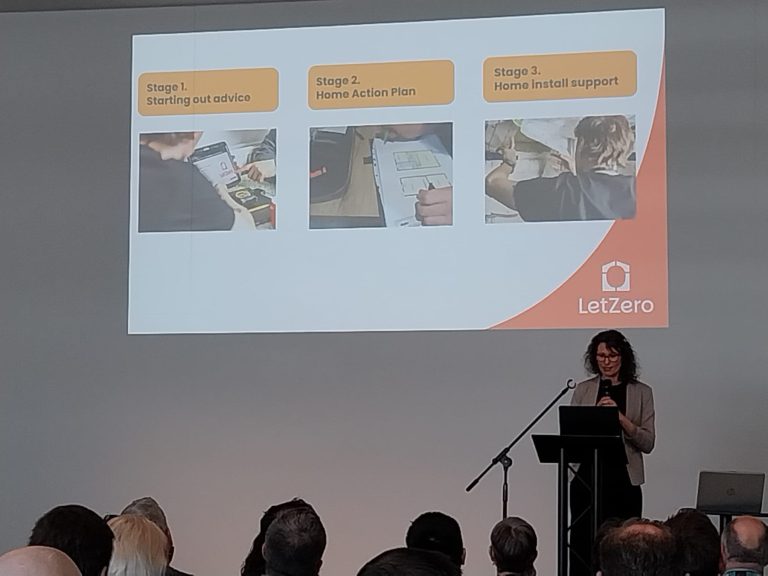
Part one of two
Let Zero is here to make energy efficiency improvements simple and accessible. By offering expert guidance, practical support, and access to funding opportunities, we help landlords and tenants navigate the home retrofit process with confidence. Our goal is to create homes that are not only comfortable and affordable to heat but also environmentally friendly.
When it comes to improving energy efficiency in rental properties, getting a comprehensive assessment is an important early stage in the process, giving insights about the measures that can be undertaken to transform how a property performs and how comfortable it is to live in.
We recently followed one of these assessments at a Victorian terraced house in Sheffield, rented by a university employee. Here’s what actually happens when experts take a deep dive into a property’s energy performance.
The landlord’s perspective
The property owner first heard about the assessment through a local council bulletin. This led him to attend an energy café event where he met the Let Zero team and learned about our services and approach.
“My motivation is to provide safe and affordable accommodation,” he explained. He was also keen to work with an organisation that has a wider social and environmental mission rather than a purely commercial operation.
Like many landlords, he’s aware of likely changes to minimum energy efficiency standards and has heard that some property owners are considering selling up rather than making improvements. He wanted practical insight into what needs doing to improve his property, how he could go about it, and the likely costs involved.
This assessment was for the first of his two rental properties. He’s planning to see what the process reveals before deciding how to approach his second property.
Starting with the human element
The assessment itself began not with measuring walls or checking windows, but with a conversation. The assessor sat down with the tenant to understand how the house is actually lived in.
“We need to know who lives here, how they use the space, and what their priorities are around energy efficiency,” the assessor explained. This isn’t just box-ticking – it shapes everything that follows.
In this case, the tenant is a single professional living alone in a two-bedroom house. He’s originally from the Netherlands, where more energy-efficient housing is the norm, and the high heating costs in the UK came as quite a shock. From talking to friends and colleagues he realised that this is a common challenge here, particularly for older properties. He keeps the house at a maximum of 17.5°C during winter, turning the heating on morning and evening, and tries not to let temperatures drop below 15°C during the day.
As part of the Let Zero process, the assessor also checked whether the tenant might be eligible for any grants to help with improvement costs – something that benefits both landlord and tenant.
Looking back before moving forward
The next step in the process was a significance survey. Because this house was built using traditional solid construction, the team needed to check its heritage status and any restrictions that might affect what improvements are possible.
This involves looking at historical records, noting if the property is listed or in a conservation area, and checking whether it has any special architectural features that need preserving. The assessor also noted how similar or different the house is to others in the area – all crucial information for planning appropriate improvements.
The technical deep dive

The next stage involved a series of in-depth surveys that go way beyond what would be found in a standard Energy Performance Certificate (EPC) survey.
Energy Modelling Survey
RdSAP is a standardised methodology used to assess the energy performance of dwellings in the UK. The assessor took a number of measurements that enable the home to be modelled, providing an indication of the property’s energy efficiency and carbon emissions. Windows were measured so heat loss and also solar heat gain influencing overheating risk can be considered. This provides the foundation for understanding how the house uses and loses energy to identify areas for improvement and enable the landlord to make informed decisions about energy-saving measures.
Ventilation Survey
Every room was assessed for both natural ventilation (windows, trickle vents) and mechanical ventilation. Door gaps under internal doors were checked as these can be used as a route for controlled air flow. In the kitchen, they found no mechanical extract ventilation to the outside, meaning the tenant had to open doors or windows when cooking, rapidly losing heat in winter.
“We’re aiming to move from uncontrolled ventilation through draughts to properly considered and controlled ventilation,” the assessor noted. “This isn’t about sealing everything up, but about managing airflow effectively – avoiding conditions that could lead to damp and mould, while also minimising unnecessary heat loss.”
Condition Survey
The assessor looked at opportunities to combine improvements with routine maintenance, identified issues that needed addressing before retrofit work could begin (like damaged cellar joists that could need repair before insulation), and recorded everything with photographs.
The assessor looked for signs of damp and mould, examined external walls, assessed the visible roof condition, and checked internal walls for cracks or plaster damage.
Importantly, the assessor’s role was to record what they observed rather than diagnose problems. Comments are passed to a retrofit coordinator who investigates further if needed.
Lived insights
The tenant’s experience offered valuable insights that numbers alone couldn’t capture. The living room was noticeably cold in winter. He mentioned that relatives sleeping on an airbed on the floor commented that cold seemed to be rising from below, suggesting a need for the cellar to be better insulated.
He’d adapted his behaviour accordingly, using an electric heater in the living room as it seemed more effective, and spending less time downstairs during winter months. These aren’t problems that would be spotted in a standard energy assessment, but they’re crucial for understanding how to make real improvements.
Despite some energy challenges, the tenant appreciated that there was no black mould (which he’d heard was common in UK properties) and that the landlord had invested in a new boiler and relatively new double glazing. He was also conscious that many of the challenges he is facing are common among the older terraced properties that make up much of South Yorkshire’s housing stock.
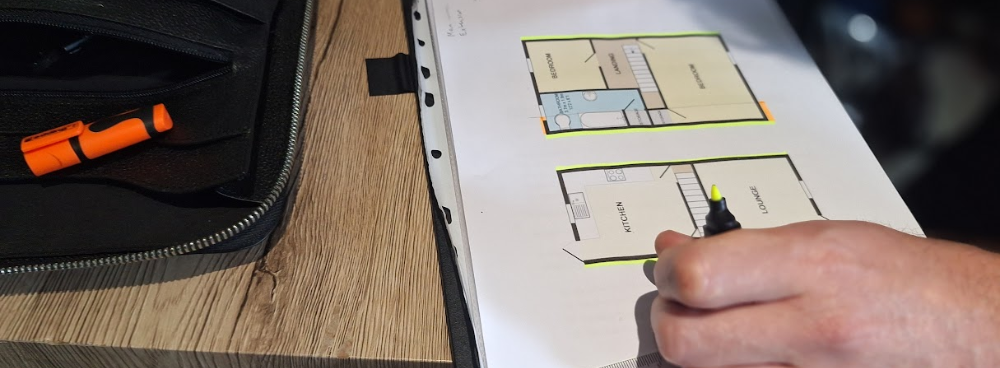
Let Zero’s Home Action Plan
This assessment is the first step in our Home Action Plan process. Following the survey, a Retrofit Coordinator performs detailed baselining of the property’s energy performance and creates improvement scenarios. These typically include:
A) Quick wins that can be implemented immediately
B) Solar PV installations combined with those initial improvements
C) In-depth insulation work building on previous measures
D) Low carbon heating systems such as air source heat pumps that complete the whole house approach
The Retrofit Coordinator then arranges a call with the landlord to discuss a comprehensive whole house retrofit plan for both short- and long-term works. Finally, the coordinator develops these scenarios into a practical long-term plan that aligns with the landlord’s requirements and budget, providing a detailed report that serves as a roadmap for improvements.
For landlords, this level of assessment can really help in understanding your property properly, which can lead to more effective improvements, happier tenants, and help prepare for likely changes in legislation, which are anticipated to require all privately rented homes to be at EPC C or above.
For tenants, the process shows how energy efficiency improvements can be tailored to real life rather than just theoretical calculations. It’s about creating homes that work better for the people who actually live in them, combining practical comfort with environmental benefits.
Look out for part two of our Home Action Plan series in September’s newsletter to learn about how we help landlords explore home improvement options and make decisions based on information collected in the home survey.
The Let Zero project is currently running as a pilot until the end of September. Sign up to access a free portfolio consultation, and be added to the waitlist to receive information about retrofit assessments at the next phase of the project.