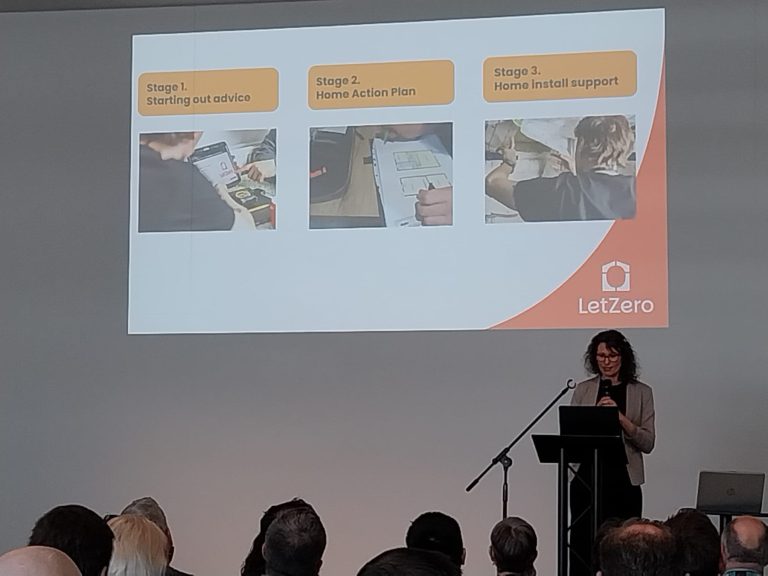
In September, we brought together seven private rented sector tenants to talk about their experiences of living in rented homes and their ideas for developing a Let Zero service that would work for them. The session was run jointly with South Yorkshire Mayoral Combined Authority’s Retrofit team and National Energy Action, and led to some really insightful conversations. We found that tenants are willing to engage with the retrofit process with the long-term goal of living in a warmer, easier to heat property, but they often don’t know the best way to do this and are unsure about how to raise this topic with their landlord.
Tenant experiences
The overwhelming message from participants was simple: their homes are cold in winter. We heard about damp evenings, condensation streaming down windows, and tenants wearing multiple layers indoors through winter. Several people talked about older properties converted into flats with poor building standards that create draughts and cold spots.
The health impacts came up frequently. For people with underlying health conditions, the constant cold isn’t just uncomfortable, it’s genuinely concerning. As one participant put it,
a warm and comfortable home would mean I wouldn’t have to worry about my health, especially during the colder months. It would also save me from the stress of constantly high energy bills and the difficult choices I have to make about heating.
Communication challenges
When we asked about challenges, the conversation quickly turned to communication between tenants and landlords. Tenants described conversations as “dead ends”. Some had raised concerns about heating or damp, and said their landlords would cite rising costs or take a long time to act. Sometimes nothing would happen at all. Several participants also said that lettings agents tend to blame tenants for damp and mould rather than looking at the property itself.
One important insight: tenants don’t think their wellbeing alone is enough to convince landlords to invest in improvements. They believed that we need to emphasise the financial benefits and property protection that come with energy efficiency work, as they perceive landlords as being focused on costs and returns.
What tenants actually want
We used “How Might We” questions to generate ideas, and the group came up with some really practical suggestions.
- Improving tenant-landlord relationships. The group talked about ways to bridge the communication gap between tenants and landlords. What came through clearly was that tenants need confidence before they can even start these conversations. Many are worried about negative reactions, potential rent increases, or even eviction if they push too hard for improvements.
- The practical tools they suggested included template letters and emails specifically for talking to landlords and letting agents, simple guides explaining tenant rights, and lists of common low-cost improvements that might be easier sells. Several people mentioned wanting “know your rights” training sessions that also cover energy efficiency basics.
Something that came up a lot was the need for independent support, someone who can help mediate difficult conversations. There were mixed views on whether letting agents could fill this role. One person thought it was possible with better training and clearer responsibilities. Others felt agents are too closely aligned with landlord interests and tenants need a completely separate service advocating for them. - Several people also suggested education sessions should be compulsory for landlords, focusing on how improvements protect property investments and maintain structural integrity. They acknowledged that financial concerns are a major barrier and suggested incentives would help.

An underlying theme was the need for clearer responsibilities all round. Tenants believe they often get blamed for high bills or damp when the real issue is with the building itself. Better information about who’s responsible for what would help cut through this blame game.
Understanding and accessing grants
This section revealed just how lost tenants feel when it comes to financial support. Several participants said they’d tried looking into energy efficiency grants before but gave up because they didn’t know where to start, couldn’t understand eligibility criteria, or didn’t trust the websites they found.
One person described calling an advice service, being referred to a scheme, but then feeling uncomfortable about sharing personal details because “the website looked a bit weird”. That lack of trust is a real barrier. Tenants want information from sources they recognise and believe in, neutral third parties who they don’t see as being driven by a commercial interest.
The group’s suggestions clustered around three approaches. First, simplifying information itself through one-stop-shop websites, clearer eligibility criteria, and step-by-step guides through the application process. Second, raising awareness through social media campaigns, community outreach, and word-of-mouth networks that build trust. Third, providing hands-on support through physical hubs where people can get face-to-face advice and help with applications.
An important challenge they identified was that grant schemes are often time-limited and keep changing. Just when you think you’ve understood what’s available, the rules shift or the funding runs out. There’s also a perception that support is aimed at homeowners and social housing tenants, with private renters falling through the gaps.
Support through the installation process
Even when improvements do happen, tenants worry about what it’ll actually involve. The group wanted communication throughout, so they know what’s happening and when. They want to understand what disruption to expect, how much mess there’ll be, and whether they need to do anything on their side.
Financial transparency was crucial. Will rent go up after improvements? Participants felt that rent increases following energy efficiency work aren’t appropriate, given the landlord is investing in their own asset and benefits from improved property conditions. But tenants need to know upfront what to expect so there are no nasty surprises.
Although tenants aren’t usually the ones getting contractors to do the work, they worry about untrustworthy people doing work in their home. One suggested a pre-vetted list of contractors with experience working in rented properties would give them confidence that the job would be done properly.
Particular support is needed when landlords are uncooperative or unresponsive. One person said it would really help if an organisation like Let Zero could communicate directly with landlords on behalf of tenants, taking some of the pressure off the tenant-landlord relationship.
Finally, keeping everyone updated with the latest guidance on installations is really important, especially for technologies that are less familiar to tenants and landlords alike.
Ideas they want to see developed
When we asked the group to develop their favourite ideas in more detail, four main concepts emerged.
- Education and training for tenants covering risks of poor energy efficiency, tenant rights, and how to access support. This would target everyone but particularly vulnerable groups, students, and both younger and older tenants. The group liked the idea of a union-style structure with pay-as-you-can contributions.
- A mediation service between tenants and landlords checking satisfaction, communicating with landlords, and providing training. This would ideally have government or council backing to be trusted, and should support tenants in all situations- from those in crisis to those just wanting to prevent problems developing.
- Online information packs and social media campaigns using visual content like cartoons and infographics, targeted at younger people but accessible across age groups.
- Community outreach using peer-to-peer models where one person reaches others in their community. This would be particularly for people who prefer in-person support or those who face barriers accessing online resources.
The workshop also reinforced something we already knew: there’s no one-size-fits-all approach. Different tenants need different types of support, delivered in different ways. Some want online resources they can access at a time that works for them, whereas others want face-to-face conversations in their local community. It’s important to offer both.
Next steps
We’re working with SYMCA and National Energy Action to turn these insights into action. That includes developing tenant resources, exploring how to create advocacy and mediation support, and looking at ways to combine both online and in-person delivery models.
As part of the Let Zero service we will continue to engage with all stakeholders in the privately rented sector, to deliver a service to benefit all involved.
If you’re a tenant who’d like to be involved in future engagement work or would find these kinds of resources useful, we’d love to hear from you.
Find out more about how tenants can benefit from the Let Zero service