By Joanne Harrison, Retrofit Coordinator
When I tell people I’m a Retrofit Coordinator, people often don’t know what that means. It’s quite a new role really, but an important one as we’re all trying to make homes more energy efficient. So what exactly does it involve? In this article I’ll walk you through how I put together a Home Action Plan.
Building from the assessment
My work starts when a property survey comes back. Sometimes I’ll have done the initial survey and sometimes it’s another assessor. I’ll be honest, my favourite ones to work with are surveys I’ve done myself. When I’ve actually been to the property and had a proper look around, I’ve got a good feel for what we’re dealing with. I can get straight into the coordination bit, whereas if someone else has done the survey, I need to go through all the data quite carefully to make sure I understand the property first. However, practically it doesn’t always make sense for the retrofit coordinator to do the surveys too.
Once I’ve gone through the property details, I’ll use the software to do an initial energy model. It’s quite clever really – it populates the screen with a string of improvement recommendations. Most of the time, the things I’d expect to see are there, though occasionally something I think should be on the list isn’t.
Developing recommendations
This is where I go into more detail analysing what the software has come up with. I go through each recommendation and do a first pass based on whether it makes financial sense. If something’s going to take 300 years to pay back, I’ll generally cross it off. The only exception I make is draught proofing, which sometimes shows really long payback periods but is actually worth doing because it doesn’t cost much and residents really notice the difference in comfort. With windows and doors, I usually only suggest upgrades if the existing fittings are reaching the end of their life.
The software provides lots of insulation options. These reduce the overall heating demand of the home, making it easier to heat, and in turn reduce the risk of damp and mould problems associated with underheating. I tend to go for cavity wall insulation only on a cavity property, and for solid walls pick one of the internal or external wall insulation options depending on the design of the house and neighbourhood.
Roof insulation gets a bit more complicated, but is highly impactful – there’s loft insulation at the joists if it’s just a loft space, and if it has rooms in the roof space, there can be insulation at the rafters where the ceiling slopes as well as loft insulation above the flat ceiling. And the walls of roof rooms need insulating too. I’ll be looking at how that works and how it all fits together.
Floor insulation is something that really depends on the structure of the house. If someone has a basement with easy access it can be a relatively easy, low cost upgrade with a big impact on resident comfort. Otherwise I’ve never met anyone who’ll say “yes, please come and rip my floor up” to insulate a timber floor from above unless they are looking to replace the floor anyway. It’s especially tough to insulate solid floors, and the energy savings on offer there are actually quite small.
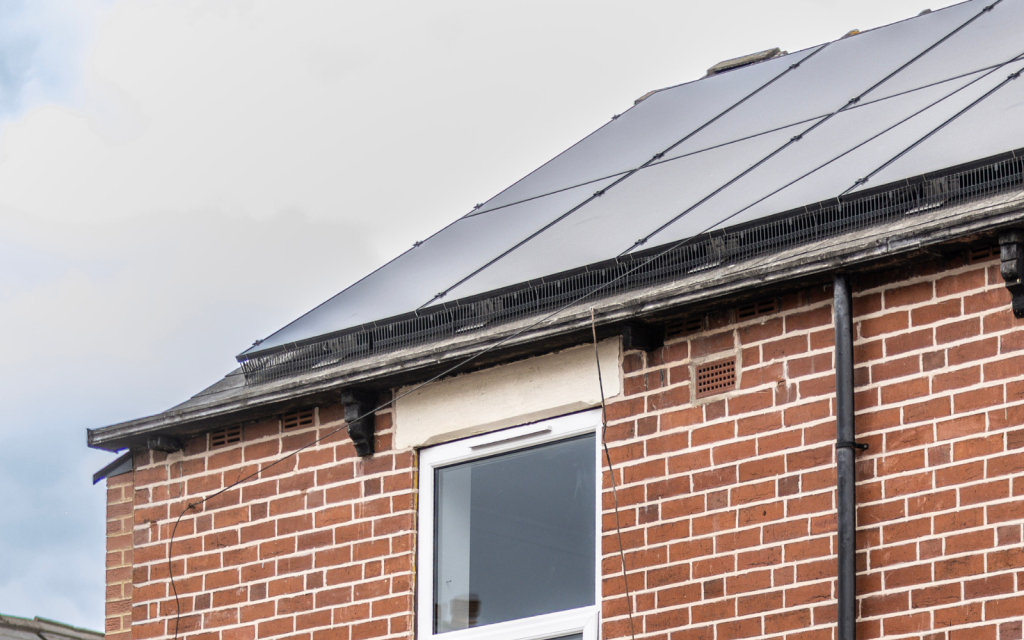
Solar PV appears on nearly every list, and it’s pretty reliable financially. You’ll usually get your money back within 25 years. It often requires me to do some careful work to establish what performance is achievable for the home. Remember these create savings through replacing energy that would otherwise be generated elsewhere, rather than reducing the energy and heating demands of the home.
Solar hot water comes up quite often too, but it’s generally not as good value as PV. The supply chain for installation and maintenance is also not as large. If you can only do one, I usually suggest going for PV.
Then there are the heating options. Fossil fuel heat sources like oil, gas and coal, can be replaced with electric heating types such as heat pumps – both air source and ground source – plus district heating which is installed in some areas of South Yorkshire. For those with older forms of electric heating, it can be a case of just upgrading what’s already there, like replacing the old storage heaters with a highly efficient alternative.
Air source heat pumps are currently quite expensive but it’s not just about the economic feasibility.- Sometimes there isn’t really a sensible place to put it in properties with no garden or a very small garden. Ground source heat pumps are typically suitable for homes with larger gardens.
Thinking about the whole picture
This is where experience really counts. I need to think about how everything works together. Take a conservation area property with lovely original features – I might not be able to insulate externally because of planning constraints, and I wouldn’t want to do it internally because it would destroy the cornices. So maybe I’d increase the roof insulation instead and look at other ways to improve comfort. But that might rule out an air source heat pump because the house won’t be well insulated enough to work well with the low temperatures they run at.
I also think about how solar might work with other things. If you’re putting in a heat pump, solar can offset some of that electricity use. You can also get special high heat retention storage heaters that work with PV systems.
Most of the time the initial software recommendations are fine, but sometimes they need tweaking. Lots of the properties I work on are older, and the software makes assumptions that don’t always work in practice. For internal wall insulation, it assumes 150mm, but that rarely happens. Most people go for 100mm, and in older properties you might have bits where you can’t do full internal wall insulation at all because of features like cornices. For those areas I might recommend insulating lime plaster instead.
If I’m suggesting something the software can’t calculate properly, I have to make calculations elsewhere and feed them into the software.
Building the scenarios
Once I’ve got the modelling sorted, I put together different scenarios for the landlord. I usually start with the quick wins – simple stuff under £1,000 that makes a difference without too much disruption.
Then I’ll usually add solar, because despite a big emphasis on “fabric first”, it’s often one of the best options money-wise. Tenants might save £350 a year with solar compared to £100 with insulation, and the solar could cost a lot less to install.
After that come the bigger fabric measures like wall and roof insulation. Heat pumps usually come last because they’re pretty expensive and you generally need good insulation first to make them work properly.
It’s a bit like climbing a ladder really. The first few EPC points are quite easy to get, but once you’re up in the 70s (a C rating) and you’ve already got solar and decent insulation, you’re looking at heat pumps for those final available points.
When reality bites
All this technical stuff is just the start though. The real challenge often comes when I present the scenarios to landlords. I was working with one recently who had flat roof properties in an estate. One really easy thing they could do was insulate all the flat roofs. The problem was, he’d re-roofed fairly recently and not insulated them. When I suggested it, he said he didn’t want to take all that off. We ended up looking at insulated plasterboard from inside, which is kind of messy and won’t perform quite the same.
It was particularly frustrating because not only had they missed the insulation opportunity, but we couldn’t put solar panels on the roofs either because installing them would damage the waterproof membrane on the roof. Now we’re looking at putting panels in the garden, which means residents are losing some garden space and they’re going to be overshadowed more. It really shows why it’s worth developing a long-term plan for a property, so that energy efficiency improvements can be installed alongside maintenance jobs when they’re needed.
The human side of things
There are always complications beyond the technical stuff. I surveyed one place where the tenant had spent a lot of time and money getting the house beautifully decorated. The house desperately needed wall insulation – it was one of those steel-framed buildings with basically nothing in the walls – but she didn’t want internal work because of all her decorating. Meanwhile the landlord didn’t want external insulation so it was really hard to find a way forward.
Working with landlords on developing next steps
After I’ve put the scenarios together, I send the report to the landlord and give them time to digest it all. Then we have a proper chat about what appeals to them and what fits their budget. We usually try to split things into phases – what they might do in the next year and what could wait five years. Alongside this, Let Zero assess the landlord’s eligibility for available grants and maximise the opportunity for a fully funded installation, or use a blend with the landlords own funds.
Most of the landlords I’ve worked with seem quite keen to do something. A lot of them have already done some improvements, so they’re thinking along the right lines. One I worked with early on was really into heat pumps and got all sorts of monitoring kit so he could see exactly how it worked before doing the rest of his properties.
What I try to bring to all this is a bit of common sense. Landlords are often paying for this work themselves and they’re not the ones seeing lower energy bills. It’s about finding what works for that particular property and situation.
Being a retrofit coordinator is really about bridging the gap between what’s technically possible and what actually makes sense in the real world. Every property’s different, every landlord has different priorities, and you need to tailor your approach accordingly. That’s what keeps it interesting.
If you are interested in exploring retrofit options with one of our retrofit experts then register with Let Zero today