The South Yorkshire Landlord Forum on 12th June 2025 brought together over 100 landlords, local authorities, and support organisations to discuss how we can all work together to strengthen the Private Rented Sector and make homes in the sector more energy efficient. Chaired by Tariq Shah OBE, the event featured expert speakers covering the state of the property market, upcoming regulatory changes, and opportunities for landlords to participate in schemes to tackle homelessness and improve the energy efficiency of privately rented homes.
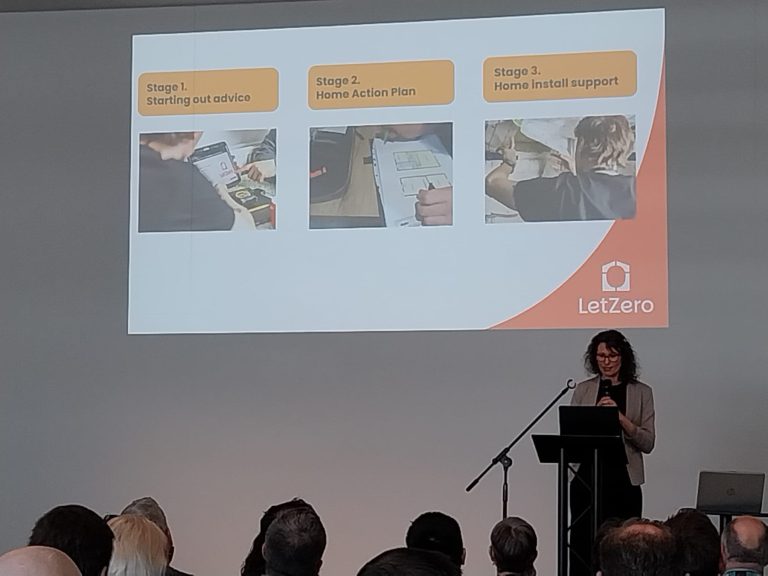
The Forum also launched the Let Zero service- a new one-stop-shop designed to support private landlords with making energy efficiency improvements to their properties.
An overview of the property market
Dean Gill from Martin & Co. Sheffield kicked things off with some eye-opening statistics about what’s happening in our local market right now. On the sales side, residential prices have climbed 3.3% year-on-year, though transactions are down 12%. It’s a mixed picture that many of us will recognise from our own experiences. In the rental market, rents have jumped 10.8% in South Yorkshire – a figure that dwarfs the national average of just 3%. One-bedroom flats have seen the steepest rises at nearly 20%.
The demand story is remarkable. We’re seeing an average of 12 applicants per listing, with properties spending around 19 days on the market. Interestingly, tenancies are getting longer too, with the average now sitting just under 28 months. This suggests tenants are prioritising stability once they find somewhere suitable.
Supply has increased with listings up 37% year-on-year, though this may level off as those longer tenancies stabilise. Nearly half of South Yorkshire’s rental stock consists of flats, and the sweet spot for rental pricing sits between £750-£1,000 per month. The landlord community itself is increasingly diverse, with plenty of new and accidental landlords joining more experienced investors.
Looking ahead, rents are forecast to rise another 3-4% in 2025, with the 12:1 demand-to-supply ratio showing no signs of easing.
Working together to reduce homelessness
Rebecca Slack from SYMCA painted a stark picture of the housing challenges we’re all grappling with. There are currently 40,000 people on social housing waiting lists across South Yorkshire- a staggering figure that puts the importance of the private rental sector into sharp perspective.
What’s particularly concerning is that the loss of private rental tenancies has become the leading cause of homelessness. This isn’t just about individual hardship; it’s about the knock-on effects throughout the system. When private tenancies fail, people end up in temporary accommodation (over 1000 households were in temporary accommodation at the end of 2023), creating additional pressure on already stretched public resources.
The forum showcased some great examples of organisations working to support both landlords and tenants, creating win-win situations that benefit everyone involved.
Charlene Whitfield from Target Housing shared how they’re currently supporting 1,400 people whilst managing 1,000 private rental homes. Their approach is comprehensive- they offer guaranteed rent, full property management, and ensure all properties meet HHSRS compliance standards. They handle maintenance in-house, conduct regular inspections, cover all bills, and offer lease terms of up to five years. For landlords concerned about void periods or difficult tenants, it’s an attractive proposition that removes much of the day-to-day stress of property management.
Michael Corbishley from Homewards Sheffield outlined their coalition approach, which launched in June 2023 as part of a five-year Royal Foundation programme. They’re operating across six UK locations and have already secured pledges for 33 properties in Sheffield. What sets them apart is their comprehensive support package, covering everything from property improvements and furnishings to tenant integration and ongoing education for both landlords and tenants.
Let Zero: Your Route Through the Retrofit Maze
One change that we know is on many landlords’ minds is the likely requirement for EPC C ratings by 2028-30, which is currently out for consultation as part of the government’s Warm Homes Plan. Malcolm Ramsey of SYMCA introduced the Let Zero project- a pilot supported by Innovate UK till the end of September 2025, with plans to continue beyond this.
Many landlords are facing a challenging situation: older properties that need significant work to meet upcoming energy efficiency standards, but with little guidance on where to start or how to fund the improvements. Fuel poverty is a real issue for tenants, and retrofit work (energy improvements to existing properties) can seem both complex and expensive.
This is where Let Zero comes in. It’s designed specifically to help landlords navigate these challenges, supporting them through the entire retrofit journey from identifying the work that could take place in their homes, through assessments, developing plans, finding installers through to getting the work done and making sure all is as it should be at project completion.
The service starts with a free Portfolio Consultation. The team will look at the EPC certificates for each property in your portfolio and assess exactly how far each home is from achieving that crucial EPC C rating. They’ll provide clear ratings that show you the likely complexity of any work needed, the potential disruption involved, and give you a realistic sense of the scale of costs you’re looking at.
After the assessment, you’ll have a meeting with one of the team to discuss which properties to focus on first, how to approach the work, and exactly how Let Zero can support you through the process. They’ll also place you in a queue to access their expanded services from October, though it’s worth noting that there may be fees for consultancy services beyond the pilot period.
A key aspect of Let Zero is its whole-house approach. Rather than suggesting piecemeal improvements that might not work well together, they look at everything- ventilation, insulation, heating systems, the lot. They also provide ongoing supplier support and tenant education to ensure that any improvements actually deliver the benefits they’re designed for. If you want to see what’s possible, they’ve set up a showhome in Tinsley that demonstrates best practices.
Getting started is straightforward. You can sign up for a Portfolio Consultation through their enquiry form at https://form.typeform.com/to/U2Lzp9Ch, and a Retrofit Advisor will get in touch to collect your property addresses and book a meeting.
Renters Reform Bill
Julie Poulton from the NRLA gave us a much-needed summary of the Renters Reform Bill, which is currently making its way through the House of Lords and could become law by the end of the year. If you haven’t been following the detail, now’s the time to get up to speed.
The changes to letting processes will affect how you advertise and set up tenancies. You’ll need to advertise your actual rent with no bids over the asking price permitted- so bidding wars will become a thing of the past. Discrimination based on whether tenants have children or claim benefits will be banned, and you’ll only be able to take a maximum of one month’s rent in advance. All tenancies will need to be monthly rather than fixed-term, and you’ll need written contracts for everything.
During tenancies, you’ll only be able to change the rent once per year, and you’ll need to give two months’ notice. Tenants will be able to request permission to keep pets, provided they have appropriate insurance.
The end of tenancies will look very different too. Section 21 ‘no-fault’ evictions will be abolished entirely, so you’ll need to rely on Section 8 grounds if you need to regain possession. Tenants will need to give two months’ notice when they want to leave. If you’re selling a property, you’ll need to give four months’ notice if the tenant has been there for more than 12 months, and you won’t be able to re-let the property for 12 months after putting it on the market.
These are significant changes, and while some will create new challenges, others may actually benefit landlords by creating more stable, longer-term tenancies.
Panel discussion: the value of collaboration
The forum wrapped up with a panel discussion that really drove home the main theme of the day: we’re all in this together, and collaboration is absolutely key to making the private rental sector work for everyone.
The panellists, including representatives from Let Zero, My Landlord Cares, Target Housing, Sheffield City Council, and NRLA, were unanimous that engagement between landlords, tenants, and support organisations is crucial for reducing risks and improving outcomes for everyone involved.
One interesting point that came up was how high rents, while challenging for tenants, are creating opportunities for innovative arrangements like guaranteed rent schemes through council partnerships. The sector is evolving, and there are opportunities for landlords who are willing to engage constructively with these changes.
The importance of ethical landlordship was emphasised throughout, particularly when it comes to supporting vulnerable tenants. It’s not just about doing the right thing- though that’s important- it’s also about building a sustainable business model and protecting the reputation of the sector as a whole.
There was some discussion about Awaab’s Law and how it will apply to the private rental sector. While detailed guidance is still pending, Sheffield City Council is committed to providing regular updates as more information becomes available.